Is HTTPS Better for SEO in 2026? Does It Affect Ranking?
Yes, HTTPS is still better for SEO in 2026, but not in the way many site owners assume.
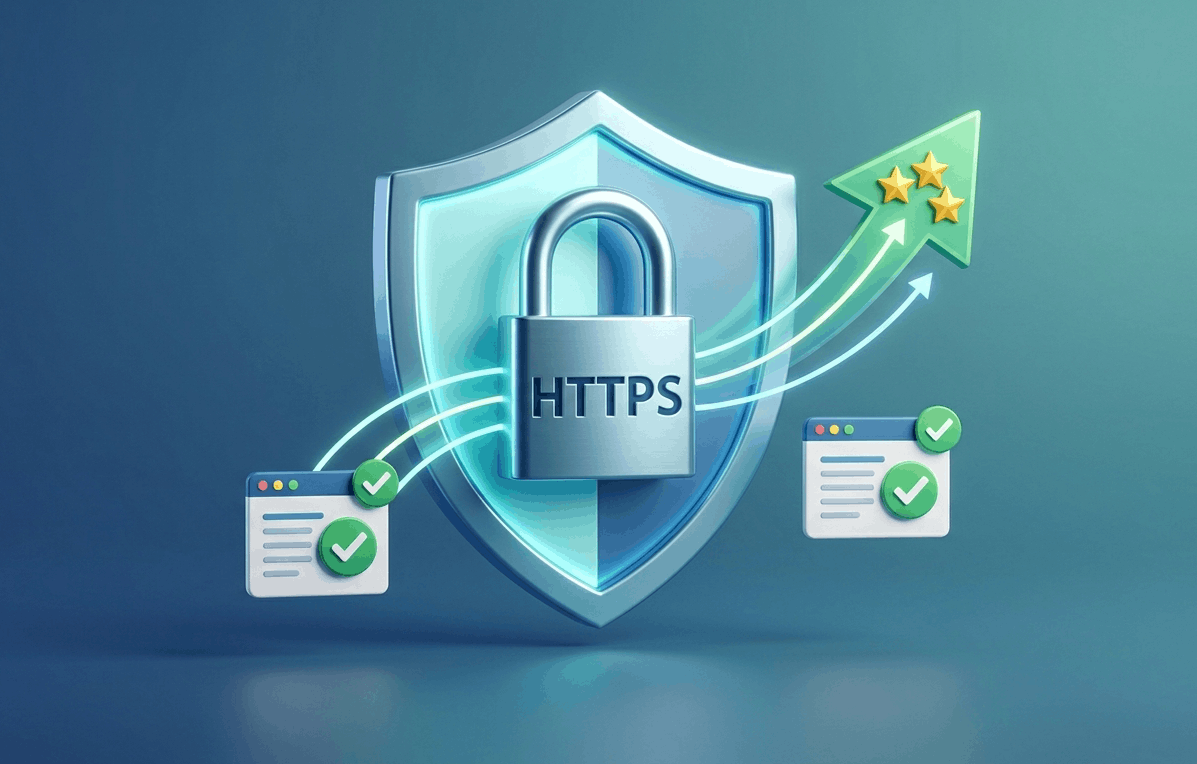
HTTPS alone will not suddenly push your website to the top of Google. Google has consistently maintained that HTTPS is a lightweight ranking signal compared to content quality, relevance, and authority. However, in 2026, HTTPS is a strong technical best practice and a trust baseline for modern websites.
Running a site on HTTP today is similar to having a slow, non-mobile-friendly website a decade ago. It creates trust issues, security warnings, and unnecessary friction for both users and search engines. Google first confirmed HTTPS as a ranking signal, even if lightweight, and modern Search guidance continues emphasizing secure delivery as part of page experience.
For modern SEO, AI Overviews, and user trust, HTTPS is less about gaining an edge and more about avoiding a disadvantage.
HTTP vs HTTPS for SEO: What’s the Actual Difference?
HTTP is the standard protocol for transferring data between a browser and a website. HTTPS adds SSL/TLS encryption, which secures that connection.
In practical terms, HTTPS protects:
- Login credentials
- Contact form submissions
- Payment information
- Session cookies
- User browsing activity
Without HTTPS, data can be intercepted or altered more easily. This is especially important because modern browsers increasingly treat non-secure sites as risky. Chrome’s long-standing “Not Secure” labeling for HTTP pages shifted user perception years ago, and browser security expectations continue tightening.
For SEO, the biggest difference is not just encryption. It is trust, usability, and technical integrity.
Is HTTPS a Google Ranking Factor in 2026?
Officially, yes. Practically, it is foundational rather than decisive.
Google’s original HTTPS announcement described it as a lightweight ranking factor affecting a small portion of queries. While content quality remains far more important, secure delivery has become a standard expectation across Google’s ecosystem.
Here is the reality in 2026:
HTTPS helps SEO by:
- Ensuring your site meets minimum trust standards
- Supporting better page experience
- Improving crawl consistency through canonical security
- Preventing browser trust warnings
- Preserving analytics referral data
HTTPS does not:
- Replace strong content
- Fix weak backlinks
- Compensate for poor user experience
- Automatically improve rankings
Think of HTTPS like responsive design. It is essential infrastructure, but not your growth strategy.
HTTPS and Page Experience in 2026
Google’s Page Experience framework focuses on overall usability, not one isolated factor. Google explicitly includes secure delivery among broader experience signals.
That means HTTPS contributes to:
- Safer browsing
- Better user confidence
- Reduced warning interruptions
- Cleaner technical health
In competitive SERPs where content quality is similar, trust and usability signals can influence outcomes.
For example:
If two pages offer similar expertise, the one with stronger page experience and technical trust may have an advantage.
HTTPS is not your main ranking weapon, but it supports the ecosystem Google wants.
HTTPS for AI SEO, GEO, and Search Visibility
In 2026, SEO is increasingly shaped by AI-generated summaries, entity trust, and credibility systems.
While Google has not publicly stated HTTPS directly impacts AI Overviews, secure websites align better with broader trust frameworks:
- Verified legitimacy
- Lower security risk
- Better user confidence
- Cleaner technical structure
For Generative Engine Optimization (GEO), HTTPS strengthens the foundation of perceived reliability.
AI systems prioritize trustworthy, authoritative sources. A non-secure website can create friction in that perception, especially for YMYL, business, SaaS, or transactional pages.
Final Verdict: Is HTTPS Better for SEO in 2026?
Yes, HTTPS is better for SEO, but mainly because not using it can hurt you.
In 2026:
- HTTPS is essential
- HTTPS is expected
- HTTPS supports trust, security, and usability
- HTTPS is a baseline, not a shortcut
If your site is still on HTTP, the bigger issue is not missing a ranking boost. It is signaling outdated infrastructure to users, browsers, and search ecosystems.
HTTPS will not make bad SEO good, but lacking HTTPS can absolutely weaken good SEO. For serious websites in 2026, secure architecture is no longer optional. It is the minimum standard.