
Why Does SEO Take So Long? – (Reasons, Timeline & Case Studies)
SEO takes time because search engines like Google need to discover, evaluate, and trust your website before ranking it. Unlike ads that deliver instant traffic, SEO is a long-term process involving content, authority, and competition.
In short: SEO is slow because it depends on trust, data, and consistent improvements, not instant actions.
Search engines must crawl your site, index pages, and compare them with thousands of competitors before deciding rankings, which naturally takes time.
Top Reasons Why SEO Takes So Long
1. Search Engines Need Time to Crawl & Index
When you publish content, Google doesn’t rank it instantly. It first needs to discover, crawl, and index your pages, which can take days or even weeks, depending on your site structure.
2. Trust & Authority Are Built Gradually
Google prioritizes trusted and authoritative websites. New websites or pages must earn credibility through backlinks, content quality, and user engagement over time.
This is why older, established sites often rank faster than new ones.
3. High Competition Slows Results
You’re not the only one trying to rank. For most keywords, you compete with hundreds or thousands of pages, all optimized for the same search terms.
To rank, your content must outperform competitors in relevance, authority, and user experience.
4. Content Needs Time to Perform
Even after publishing high-quality content, Google tests how users interact with it (clicks, time on page, etc.). This data helps determine rankings, which takes time to accumulate.
5. SEO Is Multi-Factor Optimization
SEO isn’t just one task, it includes:
- Technical SEO (speed, mobile optimization)
- On-page SEO (content, keywords)
- Off-page SEO (backlinks)
Each of these improvements takes time to implement and show impact.
6. Google Algorithm Updates & Re-evaluation
Google continuously updates its algorithms and re-evaluates websites. Rankings can fluctuate before stabilizing, delaying consistent results.
Typical SEO Timeline
SEO results vary, but industry data provides a realistic expectation. The table below shows a typical SEO timeline:
| Time Period | What Happens | Expected Results |
|---|---|---|
| 0–3 months | Website setup, technical SEO fixes, keyword research, initial content creation | Little to no traffic growth |
| 3–6 months | Content starts getting indexed, early keyword rankings appear, basic optimization improvements | Some traffic from low-competition keywords |
| 6–12 months | Stronger content performance, backlink building impact, improved domain authority | Noticeable traffic growth and better rankings |
| 12+ months | Authority established, consistent content + backlinks, scaling SEO efforts | Stable and scalable organic traffic growth |
Most websites start seeing measurable results within 3–6 months, while meaningful growth usually takes 6–12 months or longer, depending on competition and strategy.
Real Case Studies
Here I am sharing a few case studies of SEO projects that I have personally worked on. This will help you understand the SEO growth timeline for old vs fresh domains.
Case Study 1: Growth on an Aged IT Services Website
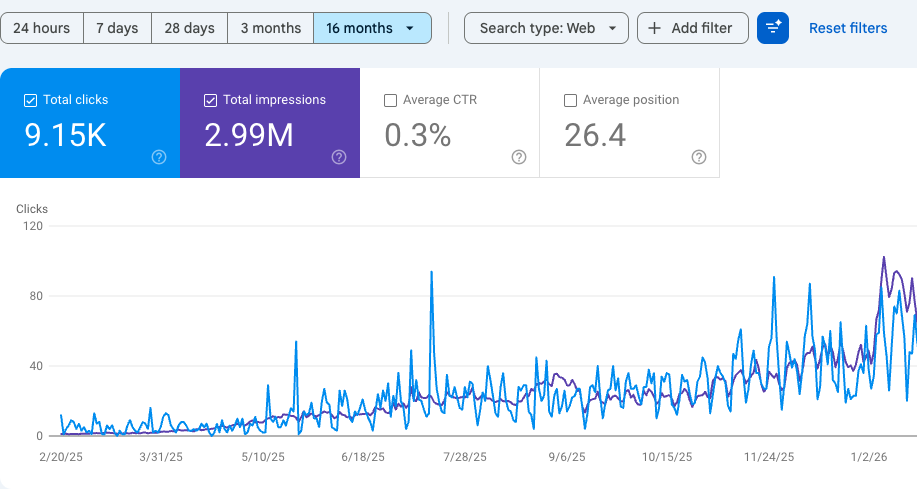
An IT company website with a 5+ year-old domain had no structured SEO strategy despite having multiple service and blog pages. SEO efforts began in February, focusing on content optimization, technical fixes, and keyword targeting.
Within just 2 months, the website started showing positive movement due to its existing domain authority.
Aged domains often see faster SEO results because they already have established trust and authority with search engines.
Case Study 2: SEO Growth on a New SaaS Website
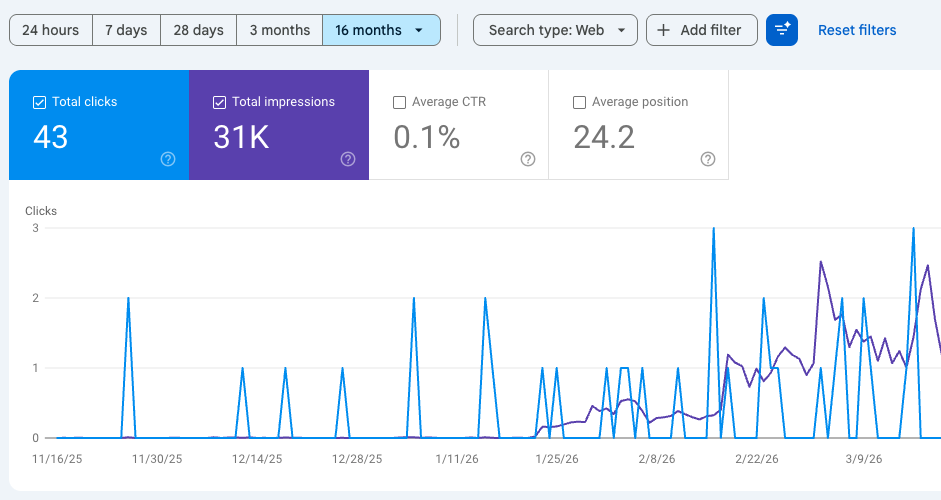
A newly launched SaaS product website with a fresh domain began SEO efforts in December. Since the domain had no prior authority or history, initial progress was slow, with minimal impressions and almost no clicks in the early months.
After consistent optimization and content efforts, gradual growth started appearing after 3 months.
New domains take longer to grow as they must build credibility from scratch, resulting in slower initial SEO progress.
FAQs
Typically, SEO shows initial results in 3–6 months, while strong and consistent results take 6–12 months or more.
In rare cases, small improvements may be visible quickly, but meaningful rankings and traffic growth usually take several months.
Yes. Despite changes in search (like AI), SEO remains a high-ROI, long-term strategy for consistent organic traffic.